Saturday, September 17, 2011

Visit to ESA & DLR - My Day in the City of Cologne


Welcome to the City of Cologne
Today is Saturday, September 17, 2011 and I am in the fourth largest city of Germany; Cologne. It is such a picturesque city with so much history. Just talking through the streets of Cologne is captivating. You see the cute houses, the stores and almost around every corner you see the big Dom, the Cathedral. What a huge building.

It is even more impressive to think that the Dom was pretty much the only building left standing during World War II. The rest of the city was flattened. Don't get me wrong - the Dom did sustain some damage but it continued to stand proud.

The construction of the Dom began in 1248 and took, with interruptions, until 1880 to complete. It is 144.5 meters (474 feet) long, 86.5m (284 ft) wide and its towers are approx. 157 m (515 ft) tall. Amazing! From 1880 to 1884 it was the tallest structure in the world - until the completion of the Washington Monument. It has the second-tallest church spires, only surprised by the single spire of Ulm Minster (also in Germany) completed 10 years later in 1890. Because of its enormous twin spires, it also presents the largest facade of any church in the world.


The city of Cologne dates back to the Roman Empire. Considerable Roman remains can be found in present-day Cologne, especially near the wharf area, where a notable discovery of a 1900 year old Roman boat was made.

From 260 to 271 Cologne was the capital of the Gallic Empire under Postumus, Marius and Victornius. In 310 under Constantine a bridge was built over the Rhine at Cologne. The imperial governors of Rome resided in the city and it became one of the most important trade and production centers in Roman Empire north of the Alps. Maternus, who was elected as bishop in 313 was the first known bishop of Cologne. The city was the capital of a Roman province until occupied by the Franks in 459.


The river Rhine passes by Cologne. At almost 800 miles it is one of the longest and certainly most important rivers in Europe. Last year I visited where the Rhine begins. There it really is just a small little thing, barely big enough to put my feet in. Here in Cologne it is big and wide with long bridges over it and large boats going up and down. In Reichenau (in the state of Grison in Switzerland) come the two rivers together; Vorderrhein (Anterior Rhine) and Hinterrhein (Posterior Rhine) - from there on it is der Rhein or the Rhine. This river has been a vital and navigable waterway carrying trade and goods deep inland. It has also served as a defensive feature and has been the basis for regional and international borders. The many castles and prehistoric fortifications along the Rhine testify to its importance as a waterway. River traffic could be stopped at these locations, usually for the purpose of collecting tolls, by the state that controlled that portion of the river.


To be here with many of my friends form America is truly an honor. And to make new friends over here is very exciting. I mentioned it yesterday inspiration, education and working together does not know boundaries. We must meet each other, shake hands, work together, share ideas, learn from each other and at the end of the day, hug each other. This is the only way we can solve current and future problems. Sure we will have differences and they can all be overcome by mutual respect and understanding.


That being said, I am proud to be here. I am proud to be representing Team SDO, sharing my knowledge of the Sun and the Sun-Earth connection with my new friends. I am proud to learn from them, see how they go about their lives and enjoy some of the wonderful customs Cologne and Germany has to offer. Oh, it is dinner time now! I must be going...


Ok, before going to bed, wanted to share a couple more pictures from today (and from dinner). I had the pleasure of going to dinner with a new friend. Her name is Ariel and she brought a little Koala bear with her so I wouldn't feel all left out.


One more thing... in case you did not see it yesterday. Discovery News wrote an article about Atmospheric Drag and they quoted Yours Truly! It's about this satellite which will be re-entring Earth's orbit next week. Sooner than expected due to increased solar activity.

One last thing. Watch SOFIA's landing today in Cologne. It is SOFIA's first time here in Cologne and I am so excited to be seeing her tomorrow again. I am already wearing both my SOFIA pins on my flight suit. You can follow tomorrow's activities live.

SOFIA and I at NASA Dryden

Friday, September 16, 2011

Visit to ESA & DLR for German Aerospace Day - Amsterdam to Cologne


The European Space Agency and the DLR German Aerospace Center are holding a first joint European Space Tweetup in Cologne. The wonderful people from ESA and DLR invited me to attend this event. And since educating about the Sun and Space Weather goes across borders and I have so many friends over in Europe, I made the trip across the Atlantic. Not only that - see, space exploration and education does not and should not recognize boundaries. Math is the same here in Europe as it is in America. Physics works the same way in Australia as it does in Asia. And inspiration is needed in Africa, South America, the United States and everywhere else.

So I arrived in Amsterdam and met up with Zebramaedchen - she is also a Tweetup attendee and offered to help me navigate through the Netherlands and Germany.


From Amsterdam we drove straight to the University of Leiden. I was really looking forward to visiting this beautiful campus.

Christiaan Huygens studied law and mathematics at the University of Leiden and the College of Orange in Breda. After a sting as a diplomat, Huygens turned to science. His work included early telescopic studies elucidating the nature of the rings of Saturn and the discovery of its moon Titan, the invention of the pendulum clock and other investigations in timekeeping, and studies of both optics and the centrifugal force.


We continued our drive to the city of Aachen. King of the Frank, Charlemagne, once was the ruler who led Europe out of the Dark Ages. He was born sometime between 741 and 748. It's also states that Aachen could have been the place he was born. He died in January of 814 in Aachen and was buried in the Cathedral. Charlemagne's success as a king can be traced to his admiration for learning and the support of scholarship, literature, art and architecture. He, himself, did not learn how to read and write and when he tried to learn it, it was too late for him. But he made sure that his kids and grandkids were very well educated.

From Aachen it was straight to Cologne where we were meeting other ESA/DLR Tweetup attendees. Some I had already known, others I met the first time. There were some familiar faces from the US, the dear Craftlas, FlyingJenny and Chris! And some familiar European faces too, like Claudia and Eico. We met right next to the Dom at the Gaffel Am Dom, a very cute restaurant with a drink called Koelsch. It is a local beer and I only tried on sip - since I am in spaceflight training I have to be serious. Plus, I don't drink adult beverages anyway.


Now it is time to go to bed. I have to get up soon again to enjoy this beautiful town and learn more about Cologne and its history. And then on Sunday I will be spending all day at the ESA/DLR Tweetup. You can follow live this Space Tweetup in Cologne event! 


Atmospheric Drag

Last month I talked about Solar Drag and and how it impacts the International Space Station.

Well, while here in Cologne, Germany (I am here to visit the European Space Agency), I was informed that due to increased solar activity, the UARS Satellite (it's the NASA Upper Atmosphere Research Satellite) is excepted to fall back on Earth even sooner than anticipated. It currently is expected to come down between September 22 and 24, 2011.


Now why is that? As solar activity increases, extreme ultraviolet radiation (also called EUV) heats Earth's gaseous envelope, causing it to "swell" and reach father into space than normal. The puffed-up atmosphere causes the slow-down of orbiting spacecrafts because of this additional "drag".

During solar minimum the gas temperature in the thermosphere is approx. 700 degrees C. That is hot but not as hot as during the solar max. It can reach approx. 1,500 degrees C. So that thermosphere has more than doubled in temperature due to the solar EUV and that increased solar heating makes the thermosphere puff out as denser layers from lower altitudes expanding upward. It can become more dense by a factor of 50 during solar max, which totally increases the atmospheric drag on satellites and the ISS.

From September 5 to 8th the "badboy" Sunspot 1283 produced several big solar flares and coronal mass ejections; Two X-class flares (the biggest category) and two M-class flares (the middle category, but still plenty powerful). The last two days we have seen over 25 C-class flares. Watch some of those flares below:
September 6, 2011 - M5-class solar flare 
 
September 6, 2011 - X2-class solar flare


 September 7, 2011 - X1-class solar flare


So that is enough to cause the "swelling" of the atmosphere and cause the slow-down of this bus-sized satellite. Most of it will burn up during re-entry. But there is a chance some pieces will survive. Where will they land? There is no way of telling until the satellite is pretty much going through the atmosphere. So, stay tuned.


Oh, and this is as good of a time to put on your fashionable tin-foil hats. Make a statement! 


Monday, August 15, 2011

NASA IT Summit 2011

Dear Blog!
I am so very sorry for not having updated you more frequently the last 6 weeks. But my travels have kept me so busy. The trip from San Diego to the Space Coast for STS-135 was epic. My visits to NASA Stennis and Glenn were productive. My participation at the Astronomical Society of the Pacific Conference and the NASA Helio Education and Public Outreach retreat was educational. And now I am at the NASA IT Summit in San Francisco "Making IT Stellar at NASA". Why am I here?

It is not just about IT. This is about exchanging ideas, sharing best practices, learning what's new and cutting edge around IT, social media and education.

This morning's keynote address by Lynn Tilton (CEO of Patriarch Partners LLC) was very inspirational. "Dream the dream, have one foot in reality and the other one in the future!"

Then there was a social media session "Becoming a Social Organization; Taking a Strategic Approach to Social Media by Anthony Bradley with Gartner. Lots of great information how social media works. It's not just about mass, it is about community and engagement, about outreach and sharing, about social feedback and listening.

While broadcasting some of the interesting facts, I was asked what my thoughts were on the following statement:

"I don't see how education can happen with 140 characters!" 

My first initial thought was a statement Anthony Bradley made a couple hours earlier "If you don't think social media works, then you are doing it wrong!". But it really takes a few characters to capture somebody's interest or to inspire somebody to learn more by following a link, looking up information, picking up a book etc. It's not so much about actually educating right there, but building the foundation to build on.

So I decided to ask the Twitterverse what they think. Keep in mind, I do not have a huge following on Twitter. It's not about the mass. But the people who do follow me, they are engaged, they are interested and they want to learn, share and feel part of the team.

What happened after I asked my followers for their thoughts on that statement truly shows the power of one social media platform alone. In this case Twitter; 140 characters or less. It started a round of discussions, people sharing their thoughts, experiences, ideas and tips. By simply asking "What do you think about the statement that you cannot educate in 140 characters" an educational round of discussions started.

Below are some of the responses. Would you like to participate remotely? You can! The NASA IT Summit 2011 wants you to be part of it. To chat during the session, please go to the session on the IT Summit Remote Engagement Site: http://open.nasa.gov/itsummit/

Use hashtag #NASAIT on Twitter.


@craigfifer: My first reaction is "Sounds like that person is a great candidate for education."

@craigfifer: 2nd reaction is, regardless of your beliefs, consider the 10 Commandments. Each 1 is ~140 chars, & they educated a society. 

@ocaptmycapt: Education is awareness, it's opening dialogue, it's accessibility - that's 140 characters; they were dead wrong. 

@craftlass: Sometimes brevity is the key to understanding. Less chance to get mired in details, more to see the big picture #NASAIT 

@craftlass:  Also, education is best when conversational. In 140 no party gets to run on, conversation improves dramatically #NASAIT 

@tigergirl528:  GrrrOWL! www.mathplayground.com What can't we do in 140 characters? The pen is mightier than the sword! 

@tigergirl528: #140WordsorLESS www.sesamestreet.org/games are cool = 92 

@tigergirl528:  #140WordsorLESS nga.gov/kids/kids.htm = 107 left 

@nasa_edge:  Definitely not quality, but I believe you can receive some form of education. Engagement possibly. 

@catherineq: Perhaps not in a "traditional" sense but *inspiration* happens and that is vital for successful education. 

@marimikel: Brevity doesn't preclude information. Educating people in 140 characters is completely possible! 

@mswz: " This morning during #NASAIT - thoughts? "I don't see how any education can happen in 140 characters" " Out of the loop. 

@jaymay: Doesn't happen in 140 chars. Happens over course of many tweets, time. Twitter's not about one-time hit, but 'relationship' 

@stubek: If a person says education cannot happen in 140 characters, they are narrow minded and against innovation PERIOD #FB #NASAIT 

@stubek: Education in 140 characters is as simple as a quick fact or a headline with a URL and more details #NASAIT 

@harbingeralpha:  "I don't see how kids can talk to one another over text." "I don't see how video games are anything but play." "I don't see..." 

@harbingeralpha: my 11 year old brother can see the value, perhaps the speaker needs a chat with him and many others. 

@harbingeralpha: my less political answer = "Haters gonna hate." 

@tim846: Twitter is a GREAT way to connect & empower. Check out our SXSW panel: yur.is/SXSWi2012 

@rocketman528: Quite a lot of education takes place in 140 characters! Almost every major science result/news article is tweeted:-D #NASAIT


@sluggernova: beyond 1st engmt/link, learning outcomes can be w/in social space. E.g. new ideas, crowdsourced knowledge. Mass collab. #NASAIT  

Tuesday, June 28, 2011

Solar Cycle Drag is a Real Drag!

{EAV_BLOG_VER:ca4a9bd3f6e26834}
One of the headlines from today's FRR (Flight Readiness Review, the board which meets prior to a Space Shuttle launch to review the status of the vehicles, preparedness  of the teams and then sets the official launch date) was an interesting one I wanted to discuss a little further: 

"Space Station altitude plan was discussed in the Flight Readiness Review. The station's altitude will be raised because of peak solar cycle drag, but not too high because higher altitudes increase the risk of orbital debris and radiation."

Let's take a look at this solar cycle drag issue.

So a couple of months ago I was at Lake Tahoe for our LWS/SDO (Living with a Star / Solar Dynamics Observatory) Science Workshop. One evening we decided to go outside and enjoy the camp fire. Somebody had the glamorous idea of making s'mores. (I don't think I have to tell you who just happened to have crackers, chocolate, marshmallow and a big stick in her survival backpack).

Anyway, I held my marshmallow over the the hot camp fire and it puffed up. In fact, my camp fire cooking skills are such, that my well-roasted marshmallow grew twice its original size. Yes, it did grow too big for my little mouth, but nothing a Swiss army knife cannot cut into more manageable pieces. But I digress...

The heat expanded that little sweet cube of delicious sugar into a much larger cube of euphoria. Something similar happens to Earth's atmosphere every 11 years when the Sun nears its solar maximum. As solar activity increases, extreme ultraviolet radiation (also called EUV) heats Earth's gaseous envelope, causing it to "swell" and reach farther into space than normal. While that sweet piece of grown marshmallow can give us a sugar high and give us extra kick, the puffed-up atmosphere causes the exact opposite; it slows down orbiting spacecrafts because of this additional "drag".

You might remember my discussions about the various layers of our atmosphere during our BTS-1 mission. Let's review this again. The troposhere is the first layer above the Earth's surface and it contains 1/2 of the Earth's atmosphere. The weather we are experiencing occurs in this first layers. Airplanes fly above the troposphere because it is more stable. That layers is called stratosphere and that's also where the ozone layer is. Now let's go a little higher, to above 50 km. That is the mesosphere and meteors burn up in that layer. One of my favorite layer comes next, above 100 km; the layer that holds the beautiful Northern Lights; the lower thermosphere. And around 300+ km above ground is where the Space Shuttle and the International Space Station orbit. And that is the thermosphere.


During solar minimum the gas temperature in the thermosphere is approx. 700 degrees C. That is hot but not as hot as during the solar max. It can reach approx. 1,500 degrees C. So that thermosphere has more than doubled in temperature due to the solar EUV and that increased solar heating makes the thermosphere puff out as denser layers from lower altitudes expanding upward. It can become more dense by a factor of 50 during solar max, which totally increases the atmospheric drag on satellites and the ISS.

The ISS can loose about 100 m per day in altitude due to this problem. So, what can be done? You got it, the ISS needs to move or be moved into a higher orbiter. There are several ways. Like the Automated Transfer Vehicles (ATV) which are attached to the station for some period of time, can give the ISS a boost outward. And just very recently the ATV Johannes Kepler maneuvered the ISS about 35 km higher up.

But you also don't want to go too high up. While it is more efficient for the ISS to be higher up, it also means that other vehicles traveling to the ISS will need more fuel to reach it. Furthermore, there is more space debris in the higher altitudes and less protection from radiation.

So, just like making your very own s'mores. You need to find that right spot above the flames to make it the most perfect one!

Wednesday, May 25, 2011

BTS-1 The Recovery

Here is what Skye, Fuzz and I had decided. We had one cupcake left but instead of eating it, we decided to just eat a little bit off the top, which is the best part anyways and then leave the rest. Why? Well, so when our rescue team found us, they knew that we left the capsule not because of hunger, but because we were bored. Plus that's what our note we left behind said too...

In other words, we decided to find a way to Port Arthur, TX. We head heard that the Janis Joplin museum was there.

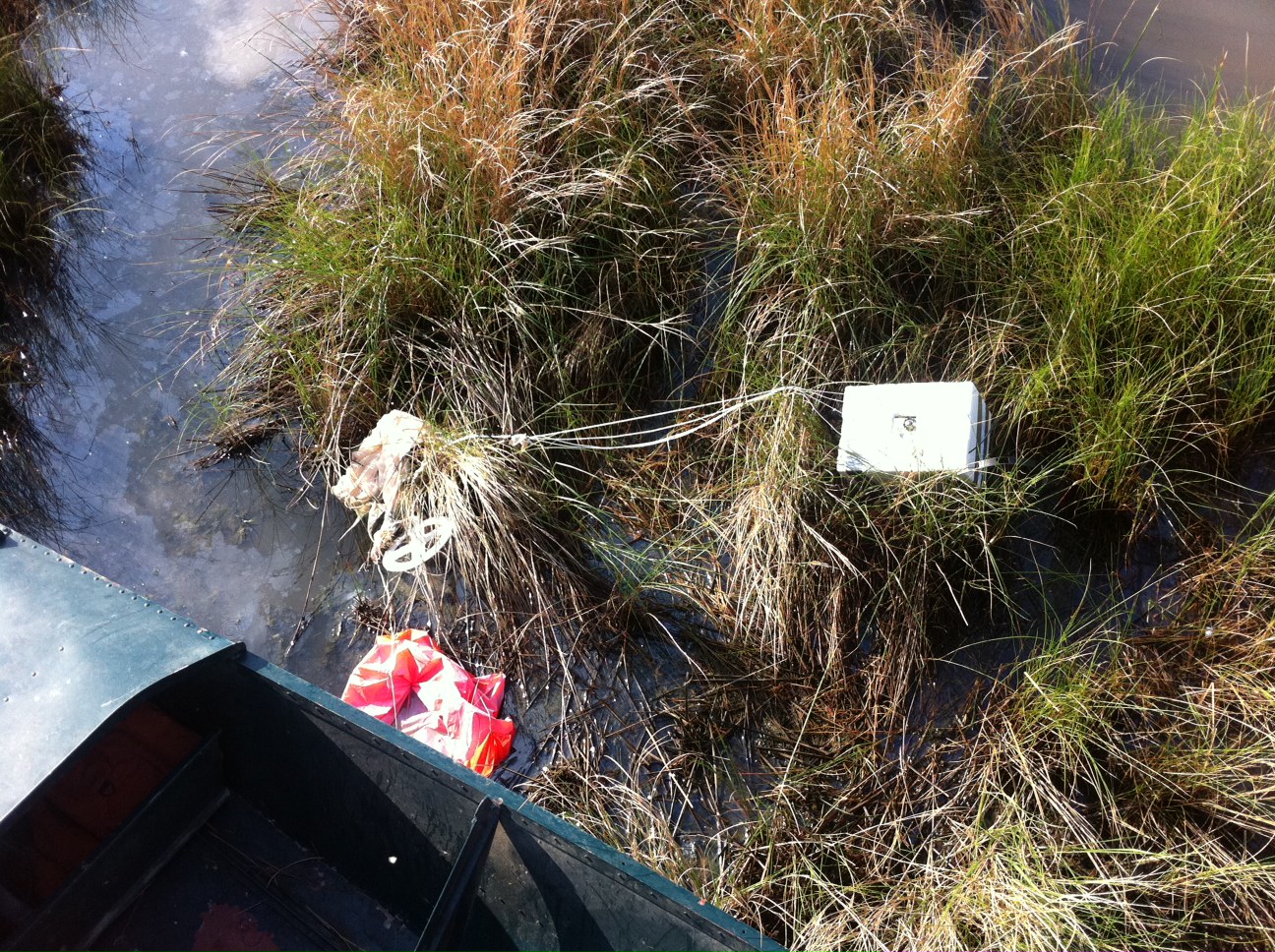
While all of this was happening, the Fish and Wildlife team decided to use the BTS-1 Inspiration rescue operation as part of their annual training. So on Thursday they flew over the swamp around the last coordinates our ground team had provided and they actually spotted our red parachute. In fact, that's not the only thing they spotted...


Then on Friday early morning a  U.S. Fish and Wildlife Rescue team assembled at the Sabine Wildlife station. The wonderful Pat Reiff from Rice University and Discovery Dome assisted the team. She got up early, drove all the way out there and was a big help to the crew. The team assembled all the needed equipment and pretty much hit the road.


Well, once they arrived at a location they could get the airboats into the swamp, it really happened quick. Except when the airboats had to "fly" over grass. That slowed them down. Amazing how these boats work.

So they arrived at our site and they retrieved our Inspiration capsule, the parachute and the left over pieces from the balloon.


So because of the note we left at the landing site, the rescue team knew to come to Port Author and find us there. And they did track us well. We visited the museum and signed our names in their guestbook and then we went across the street to get some cupcakes. It sure was a great way.


And being found now also meant that we could finally start telling our BTS-1 story. And a press/media conference was scheduled for Saturday, May 14, 2011. 


Question 1: Rick McLastnom Yay! Welcome back! I'd like to know what the dosimeter showed. 

Thank you Rick. You truly deserved to win the capsule naming contest. Inspiration was perfect and she flew as designed. To answer your question. We had a dosimiter on board? I must refer to MS1 for this!


Question 2 from Emmanuel Kool Azubuike, which turns out not to be a question after all "No question dude!"

These are the easy ones to process!


Question 3Lourdes Quintana Couceiro Mauriceasked when the crew is coming back to DC (at least that's what we believe the question is/was?)

The entire BTS-1 crew will be in Washington DC on June 18, 2011 for the National Air and Space Museum, Smithsonian Institution "Become a Pilot Day". We will be displaying our BTS-1 "Inspiration Capsule", meet kids, pose for pictures and check out other airplanes. We also hope to do a few additional tours around DC while there.


Question 4Siria Gardi-Montebugnoli wants to know "What are the lessons learnt from this mission and what changes will be applied accordingly to BTS-2? Thank you."

Siria! What a great question. Many lessons were learned on this mission. Most importantly, what you can't predict, you can't prevent. So planning is very important. There will be some amazing changes to BTS-2. We can't give you too much information at this time, but think of BTS-1 being an Apollo style mission with a capsule and a parachute. Now think about Shuttle style for BTS-2.


Question 5Duane Hyland: Fuzz, do you feel that your mission and your survival in the swamp are a product of your solid Johnstown toughness? And, a follow-up - what message do you have for the people Johnstown, who are currently going through some hard times. Thank you. Welcome back!

I believe my Johnstown origins played a part in my survival, but my training and a great crew were the biggest aspect. I would tell the people of Johnstown to stay strong, and that anyone can make a difference


Question 6Virma Johannsen "Can you please tell us if and when we can expect to see BTS-2. Additionally, will the original team have the "big bang orbs" to do it again after their ordeal in the swamps? And finally, what happened to Trigger MMS, was there "horse-play" involved which resulted in the swamp landing? 

Thank you Virma for following us. We can't release too much information on BTS-2 just yet. But this will be something that has never been done before. Think of it as a Space Shuttle style balloon mission. There will be some big challenges to be overcome. But we can do it. 

The time in the swamp was fun. It was like a camping trip. We trained well for this. What happened to Trigger? Trigger is so fast, he travels the speed of light. Once we blew the hatch open, he was out.


Question 7: Beth Hatch Maschmeier Did the crew have survival training and was it useful ? Did they get many mosquito bites while in the swamps? Will the crew have an R&R period before returning to the job?

We had extensive survival training for many possible scenarios. We will take a few days to relax and review the mission data. We were well protected from the mosquitoes in the swamp (fortunately!)


Question 8: Our dear friend Patti Barrett wants to know "How bumpy was the ride?"

Patti - the flight was pretty smooth. The launch was amazingly nice. There were some patches it was a little more rough. At some point I looked at the instrument panel and saw we were doing over 130 mph. Fuzz was a great pilot and kept us in pretty good shape. Sometimes it's difficult to judge if you are upside down or not inside that capsule. The footage will show how rough or not it really was. Can't wait to see the footage and then share it with you.


Question 9: Allan Dimmel: Welcome back . I'm glad you made it safe from your mission Also.I would like to take this time to apologize to Mission Specialist SkyeBleu for misspelling your name . My question: What was your highest altitude and how long was Inspiration flying before your landing in the Sabine National Wildlife refuge ?

Thank you, Allan. I'm sure Skye understands that her name can sometimes be tricky to spell. Our highest recorded altitude was about 78,000 feet, but we lost telemetry for about 15 minutes. We will review the data and see if we possibly got a higher altitude. Our flight time was about 3 hours.


Question 10 from Gladys Georgina Santos "How come "E.T." was able to phone home but none of the BTS-1 crew had a cell phone on them or bothered to ask to use a phone while they were at the museum, the bakery, so they could contact the rescue team. Q2: I also share V's interest in wanting to know what happened to horsey Trigger MMS. Did he "bail" out on the mission?"

Gladys, we would have to watch the movie E.T. again. Maybe we could do that tonight. I don't remember the exact specifics but I don't think ET was in a swamp and they had tons of equipment to built some sort of phone. Speaking of E.T. you know that our BTS-1 mission poster, designed byDennis Bonilla was inspired by the E.T. movie? Why we didn't contact anyone? Well, we left a note at the landing site and we decided to go and find some food and enjoy the museum. We knew they would catch up with us. We don't walk all that fast. 
In regards to Trigger MMS - we still have to look for him and get his debrief.


Question 11: Bari Demers How do you feel?

We are very tired from our days in the swamp, but we are very excited about the success of our mission. We all would like to thank you for your amazing support from the beginning


Question 12: Patti Barrett "'all cleaned up nicely. You look awesome after spending all that time in the swamp. What an ordeal."

We were a little dirty and stinky. But nothing that cannot be cleaned. I think Skye looks the best!


Twitter Question: Baby_Beau_Bear Was there ever a time that you gave up hope on being rescued?

We knew that our team is great and did their best to prepare us for the mission. It was stressful, but we were patient and knew we would find a way out.